Showing posts with label Save Money. Show all posts

Wednesday, December 18, 2013

Holiday Driving Tips


“It’s the most wonderful time of the year!” Right? Right?  Um…hello?  Ok, so maybe once the gifts are wrapped, the food is prepared and Santa has left an abundance of presents and cookie crumbs, then you can take a breather and enjoy the holiday cheer.  These next couple weeks will be hectic, we know.  It’s a great time of the year, but the stress that goes into it can be overwhelming.  There’s hope, however.  In today’s blog, we’re providing some quick tips for navigating your holiday season safely. 

1.)   If you’re going on a road trip, please make sure your car is serviced properly.  Come into our dealership anytime for oil, brake fluid and tire condition checks.
2.)   SLEEP WELL.  Get a good night’s sleep before you venture into the world.
3.)   Plan your route; this will help you in the long run.  Unsafe detours can be dangerous and expensive.
4.)   Bring a paper map.  GPS is the wave of the future, but a paper map can act as backup if you’re GPS malfunctions.
5.)   Buy snacks and drinks before you leave, because stocking up at gas stations can be costly.
6.)   Tell at least 1 family member where you’re headed.  So, if something happens, you have a reliable person to get the message out.
7.)   DO NOT announce on social media that you’re leaving for vacation.  Secure your home and leave at least one light on.  This will detract burglars from your home.
8.)   Leave early.  If the common rush hour time is 9:30, leave a couple hours early to compensate for time.

Do you have any tips to add?  Feel free!  Have a safe drive and HAPPY HOLIDAYS!!!


Wednesday, November 13, 2013

How Servicing Your Car Can Extend its Life (Even Further!)


As a car buyer, you’ve experienced the uneasy feeling of maintaining your vehicle.  In most recent years, advances in technology have lessened visits to the service department, but routine service should still not be missed.  Our dealership is a safe haven for your car, catering to its specific needs, like a preventative care center.  One of the main questions you ask when purchasing a new or used vehicle is: How reliable it is? In today’s blog, we provide some tips to maintaining your vehicle and how to extend the already long life of your vehicle.

1.    Read the vehicle manual and schedule maintenance appointments - Keeping up with your vehicle’s scheduled maintenance is key to avoiding costly problems to the cooling system, drivetrain, suspension etc…

2.    Call your dealership and ask questions – We’re here to help.  If you have any service questions feel free to call us with your questions. 

3.    Have your dealership check fluids – Always come in and ask us check the level of antifreeze, oil, transmission fluid, and brake fluid regularly. 

4.    Change oil regularly – By changing your oil when your dealership requests it, you can protect your engine.  Every car is different, so call us to get the exact information for your specific vehicle make and model.

5.    Request a fluid flush every two years – By flushing the power steering, brake, and cooling system fluid when it is pertinent, you can cleanse your car’s liquids in one fell swoop.  However, if you have gone more than 50k miles without a change, on many transmissions, it is not the greatest idea to do so.  It can cause breakdown varnish and other solids that have built up in the transmission over time.

6.    Have the tires rotated – Having your tires rotated at your nearest dealership should be second nature.  By doing so, you can avoid uneven wear and tear on the tread, extending the life of your tires.

These are just a few tips to help you maintain your vehicle in your daily commute, feel free to add your comments below!

Wednesday, October 30, 2013

Breaking Down Your VIN Number


A Vehicle Identification Number is a series of numbers we see all too often, but do we really have an understanding for what they are?  To the normal eye, it looks like a confusing series of numbers.  A VIN is the 17-digit string of numbers assigned to every vehicle.  It can reveal A TON of facts about your car, including airbag type, country of origin, engine size, model year and even the trim level!  It’s can be stamped into a plate that’s mounted on the dashboard, near the windshield, or on the driver-side doorjamb.  It could also be stamped on the engine firewall. 

If you’re looking to decipher the code, you can visit a site called decodethis.com, this site will translate the number into a readable document, changing the set of numbers into understandable content.  The information is accurate and worth a peek.  We ran a random vehicle, the result being:

The benefit of this info is using it to obtain a vehicle history report.  Before you buy a used car — even if it's from a dealer — it's important to get the vehicle's VIN and use it to run a history report that can reveal if the car has been reported stolen or if it has a salvage title. 


Deciphering your VIN number is easy once you understand it! Check out our blog for details!

Wednesday, October 16, 2013

Quick Tips: Ideas For Keeping Your Car Running Great


Life is a blur, sometimes.  Work can become stressful as the day begins and ends with an aching neck and sore feet.  The last thing on your mind is maintaining your car’s performance.  You’re more in the realm of kicking your feet up, getting a bite to eat, and catching the last part of 2 in a Half Men.  Car maintenance is very important, so how do you know if you’re over doing it or ‘under’ doing it?  In today’s blog, we discuss ways to keep your vehicle running great. 
         
          First, how often are you supposed to receive maintenance?  All of your answers lie in a small space known as the glove box.  Every car is supplied with a maintenance schedule-in the owner’s manual or in a separate maintenance log book-that includes details that vehicle’s need to sustain long and healthy lives.   Taking a few minutes to assimilate the requirements will help you avoid the following car-maintenance pitfalls. 

          Tire Inflation & Rotation

          Tires should be checked regularly, because over time, they leak naturally.  Problems can arise from under inflated tires, which suckS up more gas, as well as over inflated tires, that wear them out sooner.  Plus, front and rear tires wear differently and should be rotated to even that wear.  Your owner’s manual will have a recommendation for pressure and rotation.

          Wiper Tales
          Fall is the best time for wiper replacement.  After a certain period of time your wipers will be useless, leaving you prone to accidents.  Depending on location, wiper replacement may be an annual affair in the Southwest to a biannual chore in northern climates.

          Tune-Ups
         
          Tune-Ups are almost non-existent.  Valves no longer need adjusting, ignition timing is computer controlled and there are no more carburetors.  All you really have left is the spark plugs.  These are usually good for 100,000 miles! Save 60,000 and 120,000-mile services for timing belt, and coolant.

Got your own tip you want to ad?  Feel free!

Wednesday, September 25, 2013

How to Protect Your Pet While Driving


30,000.  That’s the number of accidents caused by unrestrained pets, according to the American Automobile Association (AAA). The Travel Association also states that 29 million Americans traveled with a pet on a trip for longer than 50 miles.  With numbers like these we want to make sure that our pets are protected.  We want to picture our favorite pets alive with enthusiasm while sticking their heads to the window and soaking in the world around them.  Here are several steps to pet safety:  

Restrain your dog – We know dogs want to have their freedom, however it’s so much safer to keep them restrained while in the car.  If your pet is unrestrained it can cause distractions and injury.  Imagine making a sudden stop.  Even at low speeds this can be very dangerous for your pet.  For small and medium sized dogs a crate, or a harness works wonders in the back seat.  Now, if you’re Great Mastiff is riding with you today (some grow up to 7 ft.  in length) we suggest you have a big enough rear area to contain them.  The Front seats can be used to block them in. 

Don’t put your dog on your lap – Having your dog on your lap is like driving while using a Tablet computer.  Huge distraction!! Your reaction time is substantially slowed and if the window is open, an extremely curious dog could run out into traffic. 

Create a ‘pet friendly’ car – some items for a dog car utopia would be: a cushioned pet bed, extendable cargo area, rear ventilation (A/C or fan), rubber floor mats, and a spill-resistant water bowl.  There are several vehicles ideal for dog lovers out there.  A lot of car manufacturers are chasing dog lovers with new technology and innovations. 

Don’t let your dog ride with their head out of the window – I know it’s tempting, but they can be easily injured by debris flying in their eyes. 

Keep proper ID – just in case your dog gets lost while traveling, you want to make sure you have emergency contact info and up to date ID tags. 

Prepare a doggie bag – make sure it contains clean up supplies, towel, feeding watering bowl, food, and toys to keep them well behaved

A pet is a family member, lets keep ours safe by practicing great car etiquette, while making the trip fun and exciting for our canine companions.

Wednesday, August 28, 2013

How to Survive Traffic During the School Year


School is back in effect for most students!  After a swift summer, our children are on their way back to the learning cave, provided they’re given a backpack on all the tools necessary to make their journey.  Now that the kiddies are safe and sound on school grounds, you can breathe easy…in that respect, at least.  Now, you have to navigate around school zones, more traffic and insane drivers.  However, you’re in luck!  Today, our blog provides ways to avoid the traffic of school zones, pedestrians and cranky motorists!

The average commuter lost 34 hours or a full workweek because of traffic in 2009, according to the latest Urban Mobility Report.  In larger cities, traffic increases from office parks being built on rural land and the lag of mass transit continues to add fuel to the fire. 

Avoid the Traffic!

Trapster, a free iPhone application allows drivers to scan the area for known speed traps, police hangouts, speed cameras or even stop-light cameras.  Using the GPS capabilities in your smart phone it uses reported speed traps in Trapster’s network database to give voice alerts of approaching traps.  This technology is due to a network of over 5 million Trapster users that constantly contribute trap locations.   

Having Trouble Finding Your Car in the School Parking Lot?

Car Finder Plus is an app that records your position when you leave your car, tracking your location in the process.  The GPS stores this location and when you’re looking for your vehicle after running your errands it provides a display of where to locate your car.   

Avoid High Gas Prices, Take the Short Road:

GasBuddy is a lifesaver for savvy individuals with a frugal mindset.  Gas changes fluctuate at the drop of a hat, sometimes varying as much as 20% within a couple city blocks.  GasBuddy is a comprehensive source for up to date gas prices.  The app lays out prices on a map and allows the user to choose one that fits their budget.  Priceless.

Wednesday, August 7, 2013

Gas Saving Myths


Gas fluctuates so often, that it’s difficult to find a consistent method of getting affordable gas ALL of the time.  With the emergence of smartphones, we can search the nearby area for gas station prices, but it’s still difficult to consistently find a price we don’t mind paying.  Sure you want to save gas, but there's a lot of bad advice on how to do it. Some of it makes no difference, and some of it can wind up costing you.  So, here’s a look at a few misconceptions:

1.)    Filling Your Tank in the Morning

Many people have heard that filling your gas in the morning is opportune because the fuel is cold.  The theory is that fluids are more dense at lower temperatures, so a gallon of cold gas has more molecules than a gallon of warmer gas.  However, the temperature varies little during the course of the day, so there’s little difference in early gas.

2.)    Changing Your Air Filter

A clean air filter WON’T save you gas.  Engines have sensors that automatically adjust the fuel-air mixture as an increasingly clogged air filter choles off the engine’s air supply.

3.)    Using Premium Fuel

Lately, premium gas has been a hard sell for gas stations.  However, many drivers still fill up with premium gas.  Newer cars for which premium is recommended, but not required, won’t suffer with regular fuel.  The result is a slight reduction in peak horsepower that a normal daily driver won’t even notice. 

4.)    Pumping Up Your Tires

Ok.  First and foremost, proper tire inflation is important.  Under-inflated tires can lead to accidents and poor handling.  According to on-the-road driving tests by both Consumer Reports and auto information site Edmunds.com, underinflated tires reduce fuel economy, so proper inflation is key. But you should never over-inflate your tires. They'll get you slightly better fuel economy because there will be less tread touching the road, reducing friction. But that means less grip for braking and turning. The added risk of a crash isn't worth the extra mile a gallon you might gain.


Wednesday, July 31, 2013

Top 5 Things Drivers HATE


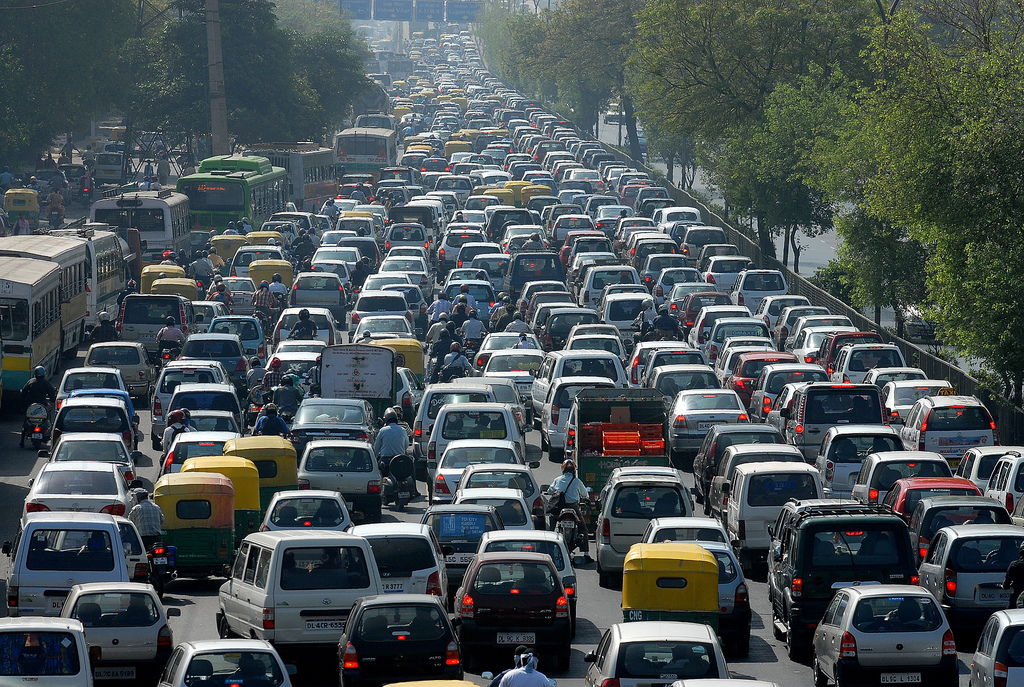
To begin today’s blog, lets paint a vivid picture of what could, or has, happened during your morning commute.  So, there you are, slowly sipping your morning coffee, the morning dew and the soothing sounds of your favorite band create a cozy safe haven on your way to work.  Your hands are on the wheel, and you’re focused.  Then, out of NOWHERE some (EXPLETIVE) swerves into your lane, causing you to spill your coffee and react swiftly to avoid injury.  In your panic-stricken state, you’ve managed to avoid an accident.  In that moment you look up to watch the person that swerved into your lane speed by, oblivious to what he had just done.  Your keen eyes focus in on him long enough to realize he was updating his Facebook status.  WOW.  In today’s blog, we asked our community for the top 10 things people HATE when they’re driving. 

Tailgaters – people that creep behind closely to your vehicle in a stop and go motion.  Usually they’re in a rush to go nowhere.

Texters – either they’re updating their Facebook status, tweeting, sending a text or writing their monologue; these individuals are causing HUGE accidents.  This can all be avoided by focusing on the commute at hand!

The “no signal when turning lanes” Guy – this person is infuriating.  They change lanes without looking or indicating.  All of this to arrive at a red light with nowhere to go.

Rubberneckers – there’s always that one person that stops an entire highway to gawk at something of interest.  A pretty billboard, a traffic accident, who knows?  Either way they’re ANNOYING and troublesome for those pressed for time.

The Makeup Queen – this young woman (or man for that matter) is applying an entire face of makeup while operating a motor vehicle.  This is a HUGE no no. 

So, do you have any to add?  What really grinds your gears?